

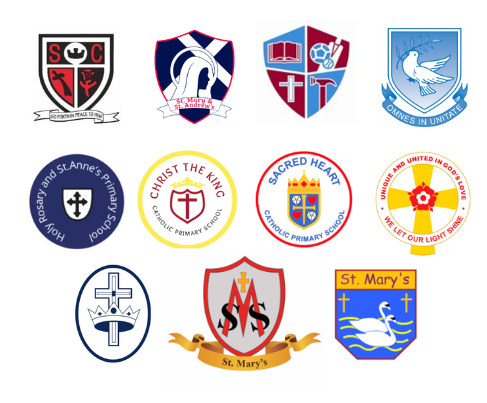
In this winter update, our Common Good Schools Project Leader Jo Stow reports that eleven primary schools have begun their Common Good Schools journey, each finding its own way to bring the programme to life. From connecting with local food banks to building relationships with neighbours, these early examples show how schools are nurturing shared responsibility and contributing to the common good.
Celebrating new eleven schools on board
This year, 11 primary schools have joined the Common Good Schools programme. They are beginning to explore what it means to build the Common Good within their schools and local communities. As the first cohort begins planning its activities, one thing is becoming clear: there is no single way to deliver the programme.
At St Joseph’s Catholic Primary School in Anderton, headteacher Kathryn Berry has taken a thoughtful approach to integrating the programme into the life of the school. Rather than treating Common Good as an additional initiative, she is looking for ways to weave its themes into existing activities. She has taken the theme of Stewardship and tied it in with Harvest activities and their relationship with the local food bank. Kathryn is also keen to avoid the programme becoming something that is entirely dependent on her own leadership. Through the school’s ‘Value Challenge’, each class is encouraged to develop its own ideas for reaching out to the community, giving teachers ownership and allowing them to draw on their knowledge of the children and their local area. A great example of subsidiarity!
At St Mary and St Andrew’s Primary School in Barton, Lancashire, Helen Bisby is working with staff to implement the programme. They have decided to make use of the flexibility of the programme, coordinating it with planned activities during the spring term. The assembly materials will be used to launch the event to the whole school, with each class considering a way that they can follow the examples during Lent. One mixed age KS2 class will be following the lesson program in the juniors, whilst KS1 will be tailoring their own version in the infants.
Community engagement is an important part of the Common Good Schools programme. St Joseph’s is making use of existing community relationships. This includes visits by Year 6 Mission Council leaders to Living Waters food bank in Chorley. In addition they plan to build relationships with elderly residents living in bungalows immediately outside the school. At St Mary and St Andrew’s, Helen is looking to build on established connections with a care home and neighbours in the community and to draw on the knowledge and experience of local residents, including a neighbour with a particular interest in local history.
A strength of the programme is that it expresses the uniqueness of each school, but there are further important considerations. In our recent check-ins, we’ve discussed the need to move beyond one-way acts of service to develop relationships characterised by reciprocity. Both Kathryn and Helen reflected on how community partners and families can become active contributors to school life, bringing their own skills, experiences and stories.
We are delighted to be working with St Mary and St Andrews, St Joseph’s and the nine other primary schools in our first KS2 cohort. We look forward to sharing their successes in the coming months and those of partners new and old.
T4CG’s Common Good Schools programme equips schools to enable children and young people develop skills around building relationships and taking responsibility. Schools acting as good neighbours in their communities not only strengthen their own students but make a tangible contribution to the shared life of their neighbourhood. Find out more and arrange a conversation with Jo here
