

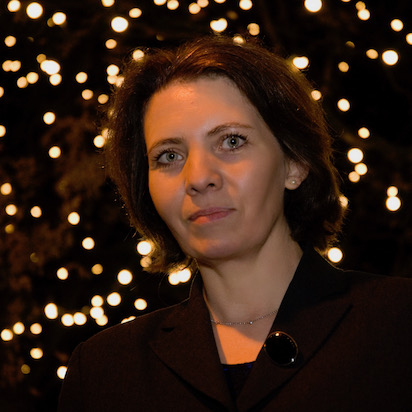
This talk was first given as a keynote on 16 July 2016, at the National Justice and Peace Conference, “Justice, Power and Responsibility: How Can Democracy Work for the Common Good?” Link to video at the bottom of this page.
We’re all feeling the fallout of the Referendum and its repercussions personally. It goes close to home, dividing families, colleagues, neighbourhoods.
It’s more important than ever therefore for us to recognise the special role that the church can play at this critical point, in working for justice and building a social peace. How we can help our democracy work for the common good.
So – in the next 40 minutes or so, we’ll go back to our roots to how our tradition can inspire and resource us. I’ll tell you a bit about Together for the Common Good, working ecumenically and across traditions. I’ll talk about the Common Good as a practice, linking with our vocation and our spirituality. I’m going to look at the mission of the church and our special calling to build community and strengthen society. We’ll explore, and celebrate different ways to foster the relationships necessary for a just and peaceful common life together.
Where are we now?
During the campaign leading up to the Referendum I got that sick feeling you get in a hall of mirrors.
Proposition after proposition was put forward.
Self-interests were offered to us as desirable choices, and then reflected back at us in multiple distorted ways.
Like a self-referential world with no air.
Social media acted like echo chambers and opinion polls exaggerated the whole process.
But whether you were for Remain or Leave, the people have spoken. A whole lot of things have been exposed that have been festering under the surface for many years.
For the most part, the Leave vote came from poor areas.
For too long, a so-called progressive agenda has held some working class communities with traditional views in contempt. They feel patronised and insulted. They have been ridiculed, called stupid, old fashioned, inward-looking, disapproved of as not politically correct. Ignored and abandoned.
And when people from traditional, proud cultures experience humiliation and powerlessness they will eventually respond.
For democracy to work for the common good, it is necessary to understand what people’s interests are, and negotiate to achieve a balance.
To do this we will have to get to know each other better and foster relationships between people who don’t know or don’t like each other.
The role for the church to strengthen civil society
Before we judge anybody else, we should look first to ourselves. Have we as Christians judged those people? Ignored people or favoured some groups over others?
Let me tell you about Ann Marie, who I know through my friend Cathy. Ann Marie lives with her four children on a run-down estate. She used to spend most of her time in her flat watching tv, going out only to get the kids from school. She said she didn’t have the confidence and there was nothing to do round where she lives.
She felt the church people in her area were more interested in campaigning about justice than in people like her right on their doorstep.
This is how Anne Marie experienced the Church.
Government efforts such as the minimum wage and the tax system can help to tackle inequality and poverty statistics but they can’t fix poor relationships, isolation, lack of agency; and they can’t fix the lack of meaning in people’s lives.
Has our notion of justice come down to handing out bits of money?
The case for Remain was built on economic arguments. But many of the people who voted Leave wanted something more meaningful.
Faith in the City published in 1985 said: “Poverty is not only about shortage of money. It is about relationships; about how people are treated and how they regard themselves; about powerlessness, exclusion and loss of dignity.” [2]
Pope Francis is calling for a poor church for the poor and of the poor. [3]
And now that the fragmented, unequal and divided nature of our country is laid bare, we need an examination of conscience, perhaps even of the Church itself.
It’s a hard question, but at parish level, have we personally overlooked people like Anne Marie?
Is it worth taking a reality check: has there been a tendency, unintentionally perhaps, to rank the needs of some over others?
Ignoring the interests of other human beings in our own society is to exclude the possibility of what they have to contribute.
In Pope Francis’ theological tradition, sometimes called the Theology of the People, ‘poor’ refers to people who live with the experience of non-power. This can be social, material, relational, spiritual, economic or in other ways. He says if the Holy Spirit is set free among these people this is how the Church itself will be transformed. [4]
Faith in the City highlighted relational poverty 30 years ago. Now, some of the Church of England are addressing the new context. Philip North, Bishop of Burnley says: “We are hooked on an outdated Temple model: thinking we are doing good by shouting at government from on high rather than seeking locally-based solutions. I am sick and tired of hearing pompous tosh about the ‘Church’s prophetic voice’ or the ‘Church in the public square’ whilst at the same time we are busy abandoning the people we purport to represent.” [5]
Our common life together is being challenged.
The emphasis on rights, identity politics, extremism and single interest groups amplifies mutual suspicion and fragmentation. And social media, dangerously, can actually make interaction less likely with people different from ourselves.
The potential of what the church can do to meet this challenge is vastly underestimated.
Our traditions of love, hope, responsibility, human dignity, family, community, relationships – our habits of mind – are sorely needed now.
We know that money is not the whole answer.
There is a special role for the church to strengthen civil society.
We can foster a culture of encounter, where people of different experience meet – at all levels and in all sectors. We can build the links between local institutions and between estranged groups.
Can we be the ones with the courage, who are prepared to ‘stay in the room’, negotiate and keep the dialogue going, recognising the humanity in everyone, affirming the legitimacy of what they have to say?
Church buildings, parishes and people are perfectly placed to be at the heart of the solution. We can create value that doesn’t necessarily require money.
The concept of mercy is at the heart of this.
Do you remember the feeling of being totally forgiven? Totally loved by God?
This is what the church is meant to do, through us – to convey that feeling. To everyone. Not just our favourite people.
This is the kind of church Pope Francis has been asking us to be since Evangelii Gaudium. [6]
This is the kind of outward-facing church Archbishop Derek Worlock, my father Bishop David Sheppard and their Free church colleagues built together a generation ago. [7]
They listened to all the voices. They were branded statist by the Thatcherite right. And as traitors by the hard left. They didn’t take the easy path.
They brokered relationships between mutually suspicious and hostile groups – police and black community, business and unions, stood in solidarity with communities as they found themselves caught between the Militant tendency and the Conservative government. They kept channels of dialogue open. They worked with business, affirming their crucial role for the common good.
Their twenty year ecumenical partnership encouraged the churches of that time – clergy and laity – to empower local leadership in ‘communities of the left behind’. They worked alongside people, not doing to but working with people like Anne Marie, building up their capacity.
Their body language said it all: side by side they modeled an outward-facing church acting in the interests of the people, not in the interests of their individual institutions.
It was a church in the street, in factories, in offices, in business – not only in the pews.
They were ‘responsive to context’ – not obsessed by the church, or by politics, but more concerned with the messiness of human life, the reality of human life.
They were not socialists, but radical traditionalists for whom poverty was an affront to the body politic.
They resisted the seduction of political ideology on both the right and the left.
The resisted being sidetracked by doctrinal differences. But loyal to their own traditions: no syncretism there. They learned from each other, realising that each had different gifts to bring. Gifts like Catholic social teaching, the see-judge-act methodology, hospitality to the whole community, courage and negotiating skills. United in the Gospel.
They rolled up their sleeves and enjoyed “smelling like sheep”. [8]
This is what made the church relevant then, and it’s what society needs now.
What if this became the default way to be a Christian?
This is what inspires Together for the Common Good. I’ll talk more about that in a few moments. But before that, will you come with me?
Let’s see why relationship is at the heart of our tradition.
First things: the Trinity, vocation and spirituality
I’m sure you know the extraordinary 14th Century icon by Rublev. [9]
It takes as its subject the mysterious moment where Abraham receives three visitors as he camps by the oak of Mamre.
On one level this picture shows three angels seated under Abraham’s tree.
On another it’s a window into the realm of God.
It’s a visual expression of what the Trinity means, the nature of God, and how every living person is called into a great creative participation with him.
Reading the picture from left to right, we see: the Father, the Son, and the Holy Spirit.
The Father looks forward, raising his hand in blessing to the Son. His gesture expresses a movement towards the Son. “This is my Son, listen to him… “
The hand of the Son points on, around the circle, to the Spirit.
We can see the movement of life towards us, flowing clockwise around the circle.
As the Father sends the Son, as the Son sends the Holy Spirit, so we are invited and called to complete the circle with our response.
We respond to the movement of the Spirit – who points us to Jesus.
This is the movement of our lives, in response to the movement of God.
There are three signs at the top of the picture: the hill, the tree, and the house.
The Spirit touches us. He leads us by ways we may not be aware of, up the hill of prayer.
It may be steep and rocky, but the journeying God goes before us along the path.
It leads to Jesus, and it leads to a tree.
A great tree in the heat of the day spreading its shade. A place where we begin to find out the possibilities of who we can be.
The tree is on the way to the house of the Father. The door is always open for the traveller, for the returning prodigal.
Each of the visitors has a staff to show they enter into our journey, our slow movement across the face of the earth.
God is with us in the weariness of our human road and sits down at our ordinary tables.
There’s a space for us at this table. We’re invited to complete the movements of God in the world by our own response. We’re invited to enter into a relationship. It’s being part of this relationship that makes us fully human.
So as we think about democracy, justice and peace, this is the point from which to start: from the Gospel, out of Jesus’s interior life.
This gives us a jolly big clue about our role as Christians in the world.
It’s our job to show how humanity can recover a proper view of the human person. Not through the lens of money or unfettered personal liberalism, nor through extremist political positioning, nor through a dehumanising lens of efficiency and distributionism. But through one human person’s relations with another.
The primacy of the human person in relationship with others.
As Benedict says in Caritas in Veritate: “As a spiritual being, the human creature is defined through interpersonal relations. It’s not by isolation that man establishes his worth, but by placing himself in relation with others and with God.” [10]
As Pope Francis says – if we don’t keep this channel open then we’ll be no more than an NGO. [11]
To discern our mission, or our ‘hidden journey’, requires a very deep kind of trust.
A trust that ‘where God has placed me is sufficient, not knowing where it will go’.
Together for the Common Good, the Common Good, Catholic social teaching
That kind of trust is what has brought me here today.
Five years ago I had no idea what was in store. I can only describe what happened as a movement of the Spirit, pulling me onto a completely new path. I was living an ordinary family life, working in graphic design and as a serial volunteer. My sons were 11 and 13. For the first time since my conversion to the Catholic Church in my mid-twenties, I felt I was being called. It was my ‘hidden journey’ breaking through.
I found myself drawing a cross formed of the words ecumenism and social justice. And the intersection seemed to say reconciliation. It seemed the Holy Spirit had plans, but it wasn’t clear to me what to do.
For the first time in my life I felt drawn to look at what my father and Archbishop Derek learned from each other; what was their ‘Better Together’ [12] philosophy really about; how could it be relevant for now. I felt out of my depth but prayed my way along. And asked for help.
I could hear my dad saying ‘who are your allies?’
A steering group formed in 2012. We didn’t intend to do more than hold a conference [13] and publish a book. But it’s grown, and is continuing to grow, unfolding in all sorts of unpredictable creative ways.
Our newsletter is now read by nearly 1,800 people and organisations [14]. Our website is a well-used resource, we’ve published our research into ecumenical social action as a handbook [15], along with a book of essays on the Common Good from different political and belief perspectives [16]. We assist others in their efforts for the common good, we’ve hosted public debates [17] and private conversations bringing people of different traditions together.
We’re now developing materials to enable teachers, clergy, laity, communities and young people to engage with the Common Good as an idea and as a practice.
We’re deliberately not a membership or a campaigning organisation. We like to be low key, a bit like a catalyst – to prompt others rather than to centralise. We have a staff of one (me) plus an intern for a few months. But it seems we are sent the graces we need: we punch above our weight thanks to our steering group members, associates working on our projects, our community of advisers and working partnerships across all the denominations and beyond. We’re ecumenical, non-partisan, and independent of any institution or denomination. There is no place for sectarianism or factionalism here.
Like David and Derek, although we disagree on some things, we think it’s mutually beneficial to work together across our differences. We’re open to learning from each other.
We encourage ‘Common Good conversations’.
Reconciliation was their method for building the Common Good. So like them, we want to encourage and equip people of good will to work together, across their beliefs and political differences, as agents of change for the Common Good.
Especially the laity, sitting at the table in conversation with the Trinity, open to discerning their hidden journeys.
The Common Good
Now before we go any further, can I just be clear what we mean by the Common Good. We all think we know what it means, but definitions are contested.
So the idea resonates from Aristotle, to Indaba, Ubuntu, Shalom, across humanist, Jewish, Christian and many other traditions. No one has a monopoly on the idea of the Common Good.
We draw from across all the Judeo Christian traditions and in particular, from Catholic social teaching – or, as it is a living body of thinking – you could say Catholic social learning.
So the definition goes: “the Common Good is the set of conditions in which every individual in the community can flourish.” Yes.
But if we stop there then the concept sounds woolly and can be misrepresented.
It’s how that set of conditions is created that is the crucial question. The Common Good needs to be built by us, together across our differences.
It starts with conversation. Locally, by people talking to each other.
I cannot create the Common Good on my own, or by just talking with my friends.
To build a Common Good requires people who may disagree, and whose interests and circumstances are different, to encounter each other in relationship. The results are surprising.
It’s a kind of alchemy.
It is about a balance of interests. Simply put ‘it is in my interest that you thrive.’
So we talk about the practice of the Common Good.
And although it is a principle in its own right, we are also using “the Common Good” as an overarching term to refer to all the core principles set out in Catholic social teaching, because the building of the Common Good depends on the application of all those principles. [18]
Catholic social teaching
As we know, Catholic social teaching is about the promotion of social justice, but it’s also a recipe for building a common life together.
As we’ve tried to share it across Christian traditions its name is often a barrier to non-Catholics.
So, in an ecumenical and broader context, we talk about ‘Common Good Thinking’ and at entry level we use the broad headings of: ‘The Common Good; The Person; Relationship; Stewardship and Everyone is included, no one is left behind.’ [19]
Beneath these headings are the familiar principles of ‘human dignity, dignity of work, equality, respect for life, reconciliation, subsidiarity, solidarity, participation, association’, and the importance of intermediate institutions.
It’s important that we give weight to all of the principles, and resist the temptation to pick and mix based on our own particular concerns.
And to keep in mind that we can only release the potential of what these principles can do if we keep that channel – our relationship with the Trinity – open.
We must be clear where our centre of gravity lies.
Catholic social teaching rejects ideology, both individualist and collectivist – big business and big government – both tend to dehumanise. CST offers a constructive process of discernment, not a protest narrative.
CST will only secure credibility as widely as it should, if it is clearly understood to transcend party politics. Its potential will never be realised if it, or we who use it, are seen to be an appendage of a particular party.
The old left-right orthodoxies have not succeeded in building a common life.
Partisan, tribal politics puts off the majority of people of good will.
Most people want to contribute and build a better world – but they don’t want to be part of a politicised, tribal approach.
For a long time the social justice field has been the preserve of a minority.
What about everybody else?
The majority have in effect been cut out and their contribution lost.
How do we get those people involved?
If we are to succeed in a new settlement for the Common Good, we all need to put our shoulders to the wheel and work together.
We can no longer afford to limit our potential with a restricted view. We cannot continue to do things the way they’ve always been done.
We need a joined-up approach that makes it possible for everyone to find a role, so they find their own ‘hidden journey’ linking with their vocation. This is deeply connected to the mission of the Church.
As Deus Caritas Est reminds us: ‘For the Church, charity is not a kind of welfare activity that could be left to others, but is an indispensible expression of her very being.’ [20]
So – social action is not an ‘add-on’ but an integral part of what it means to be a Christian.
But we are less effective while we are divided from each other in our silos.
Wider application of Catholic social teaching: the practice of the Common Good
It’s time to climb out of our silos and see what else is going on – looking across sectors, and ecumenically – from the parish to the boardroom.
The application of the principles is only limited by our imagination.
There is of course so much going on through the institutional churches, the religious orders, the major charitable and denominational agencies – like CAFOD, Salvation Army, Christian Aid, Tearfund, and the 43 charities in the CSAN network: involving thousands of volunteers, in so many sectors, dealing with homelessness to refugees, from prisoners to modern slavery.
But what about at parish level among the mainstream laity, and other ordinary people of good will?
And, can we be more ambitious than we have been? Perhaps we need a broader view of how our principles can be and are being applied to achieve deep, structural change:
- There’s Citizens UK of course, perhaps the best known application of the principles – empowering people through the Living Wage, CitySafe and other campaigns;
- I’ve long admired the Church Urban Fund, their Together Network, and their Near Neighbours programme – which help parishes encourage people of different faiths and of no faith to come together to improve neighbourhoods;
- There’s the essential social knitting going on at grassroots level by the ecclesial communities, like Focolare, the Columbans, Maranatha, St Egidio, Catholic Worker Movement and others
- There are numerous others following their own charism like SVP, Pax Christi, Church Action on Poverty, the Coventry Cathedral Cross of Nails Community, so many others.
- I’ve also learned about the explosion over the past ten years, among the Evangelical movements of parish-based franchises – through organisations like Cinnamon Network and Jubilee Plus – supporting people out of debt and addiction, welcoming refugees, running job clubs, mentoring, night shelters, parenting and resilience, working with ex-offenders, counselling in the workplace, befriending, making lunch in the school holidays, and of course foodbanks – all done by trained parishioners on a voluntary basis – rebuilding, empowering people, one relationship at a time.
- I’ve visited parishes intentionally reaching out to people in their neighbourhoods, beyond their congregations, fostering local leadership among people who otherwise would be left behind. Take Anne Marie, who I mentioned earlier. Someone actually knocked on her door and asked if she wouldn’t mind helping by baking a cake for a parish initiative called ‘Crafternoon Teas’. She was astonished that anyone would want her help. But they said ‘We need you.’ Having been so isolated before, her life is now transformed: she’s leading a community project. This asset-based approach focuses on what she can do, not on what she lacks, not what services need to be provided for her, not on what systems need to be changed. This relational approach leads to material changes too.
- We need to build a Common Good wherever opportunities arise. I’ve met extraordinary people doing quiet unglamorous work at local level, reclaiming responsibility and belonging, building back a sense of local pride, strengthening what Catholic social teaching calls ‘intermediate institutions’ and the bonds between them: from clubs, associations and schools, to Community Land Trusts and Community Energy Trusts;
- I’ve come across countless small local small business owners whose faith or good will motivates their dedication in their communities for very small margins;
- I’ve met people whose gift is to reconcile estranged groups – in workplaces, neighbourhoods, organisations. Mediating, keeping people in the room, building relationships where there is mistrust and suspicion: between left and right, marginalised and powerful, business and unions, faith and secular, sectarian groups, urban and rural, old and young, educated and uneducated, management and employees, tenants and landlords…
- There are those whose calling is to re-humanise managerial systems that have lost their soul, in the workplace, fostering love and good relationships in the social care sector, being more human with the vulnerable and in one size fits all bureaucratic processes. They know that helping one person in one way may not be the best way of helping another. It’s a matter of getting to know people personally.
I’m coming across more and more Christians active in the movement to reshape the economy: resisting the dominance of money and reforming this broken form of capitalism. They are showing it’s possible to change the way the market works by participating; creating the world we want to live in through choices we make. Some examples are:
- There’s ToYourCredit, the Archbishop of Canterbury’s initiative to create a fairer financial system including the Church Credit Champions network – teaching about money and debt in parishes – and on target to bring in in more than 3,000 credit union members by the end of the year; since ToYourCredit started, payday lending has declined by 68%;
- I’ve met lay people building relationships between charities, business and investors and the communities and places that so desperately need inward investment, like the Social Stock Exchange, with Christians of all denominations on the board, enabling investors to invest in companies with social and environmental missions – while also generating viable returns;
- I’ve met ShareAction who train investors and ordinary savers to make the investment system a force for good;
- I’ve learned about the ethical banks, like Triodos and Oikocredit. And about Responsible Finance Providers. Imagine if we all – not just the activists – banked ethically, and requested our pensions were invested responsibly?
- I’ve got to know CCLA and the Churches Investors Group who collectively invest billions on behalf of thousands of churches and charities, whose approach of engagement rather than divestment, has changed the behaviour of big companies such as Vodafone;
- And I’ve learned about the responsible business movement – people taking the risk to create wealth and jobs, honouring the dignity of labour and involving workers in decision making:
like Timpsons, who employ ex offenders, Whitbread who recruit long term unemployed and of course John Lewis and other Quaker inspired models;
Then there’s the Blueprint Trust, set up by Cardinal Nichols, working with companies like KPMG and Centrica, bringing the principles of CST into the boardroom
The international B Corp movement – which is to business now what Fair Trade certification was to coffee.
The purposeful entrepreneurship and mission-led business sector is growing fast – Millennials want to be part of a positive story.
Some things have to be done at government level. Much more of the responsibility can and should be taken by us.
This is what we mean by being ‘agents of change for the Common Good’ – linking our personal spiritual journeys with how we live.
How can we move away from the restricted view, and get everyone on board?
Why work together?
If we are to be effective, we need each other. What if we climbed out of those silos and worked together?
There are lots of reasons why we don’t, or don’t want to.
It’s a hassle. Collaboration is too time consuming. What about the strange practices of other denominations? Different ways of praying: hands up / hands down! We may strongly disagree politically. Let’s face it we will always have suspicions and excuses.
But working ecumenically and cross-party is at the heart of our work. I’ve seen at first hand how MPs across parties have more in common than you might think. As Christians we should not tolerate demonisation.
We should all be asking ‘who are our allies’ …
We need each other’s different gifts, connections, dispositions and expertise.
The ‘Together’ in the Together for the Common Good logo reminds us that as Christians, our default should be working across our differences.
The political landscape is changing hour by hour.
But our tradition doesn’t change. It transcends left and right. It’s radically inclusive.
The ‘collaboration’ in the logo reminds us that first we are collaborators with God. It’s his plan not ours.
So I will leave you with these thoughts:
The icon tells speaks of the dignity of the human being in relationship. The human person is invited by his or her life to show forth the glory of God. Not to be reflected back at him or herself as in a hall of mirrors. He or she is more than the object of handouts. More than a commodity.
The mission of the church is bound up in the renewal of society – an outward facing church, the laity especially playing a vital role linking spirituality with individual vocation – the theology of the Holy Spirit in practice – we can rehumanise systems that have lost their soul, reshape the economy through our actions, encourage leadership among the poor, build community and reconcile estranged interests.
Working ‘Together’ and building relationships: the Trinity is our clue. Across beliefs, circumstances, and perspectives. Vulnerability is a strength. In this critical time we need to be building alliances of good will:
‘Who can I work with to get this done? What skills do you have? Can you help me?’
We should ask ‘Lord, surprise me, show me who you want me to work with.’
This is the route to a meaningful political, cultural and economic life.
It will strengthen our democracy.
This is the kind of church our country needs us to be, and it needs us to do this now.
May I leave you with this piece of scripture which for me, best describes the Common Good:
“Seek the welfare of the city where I have sent you, and pray to the Lord on its behalf, for in its welfare you will find your welfare.” Jeremiah 29.7
© Jenny Sinclair
Jenny Sinclair is the founder/director of Together for the Common Good (T4CG), working to help people across the churches strengthen the bonds of social trust. She is the daughter of the late Bishop David Sheppard, whose working partnership with Archbishop Derek Worlock and Free Church leaders in Liverpool a generation ago is the inspiration behind T4CG.
NOTES
- [1] Click here to see a video of another keynote given by Jon Cruddas MP at the same NJPN conference – ‘A politics based on virtue, ethics and the Common Good’
- [2] Faith in the City
- [3] Evangelii Gaudium (see #187, 197, 198, 199)
- [4] The theology of the people
- [5] Keynote by Philip North, Bishop of Burnley, at the Churches Estates Conference, March 2016
- [6] Evangelii Gaudium
- [7] The Sheppard and Worlock partnership
- [8] Evangelii Gaudium (see #24)
- [9] The Rublev icon – ‘Trinity’ or ‘The Hospitality of Abraham’
- [10] Caritas in Veritate (see #53)
- [11] See speech by Pope Francis in March 2013
- [12] ‘Better Together’ by Sheppard and Worlock
- [13] T4CG conference, 2013
- [14] T4CG Newsletter
- [15] A Faithful Presence
- [16] T4CG book of essays
- [17] T4CG debates
- [18] Catholic social teaching
- [19] Common Good Thinking
- [20] Deus Caritas Est (see #25a)
Other talks by Jenny Sinclair:
- Good Neighbours and the Common Good (January 2017, Arundel and Brighton Justice and Peace Assembly, Annual Conference) [includes podcast]
- For the Common Good: Tell each other the Truth (December 2017, Truth Telling in Politics conference, Las Casas Institute, Oxford)